Key Benefits of Community Demographic Research
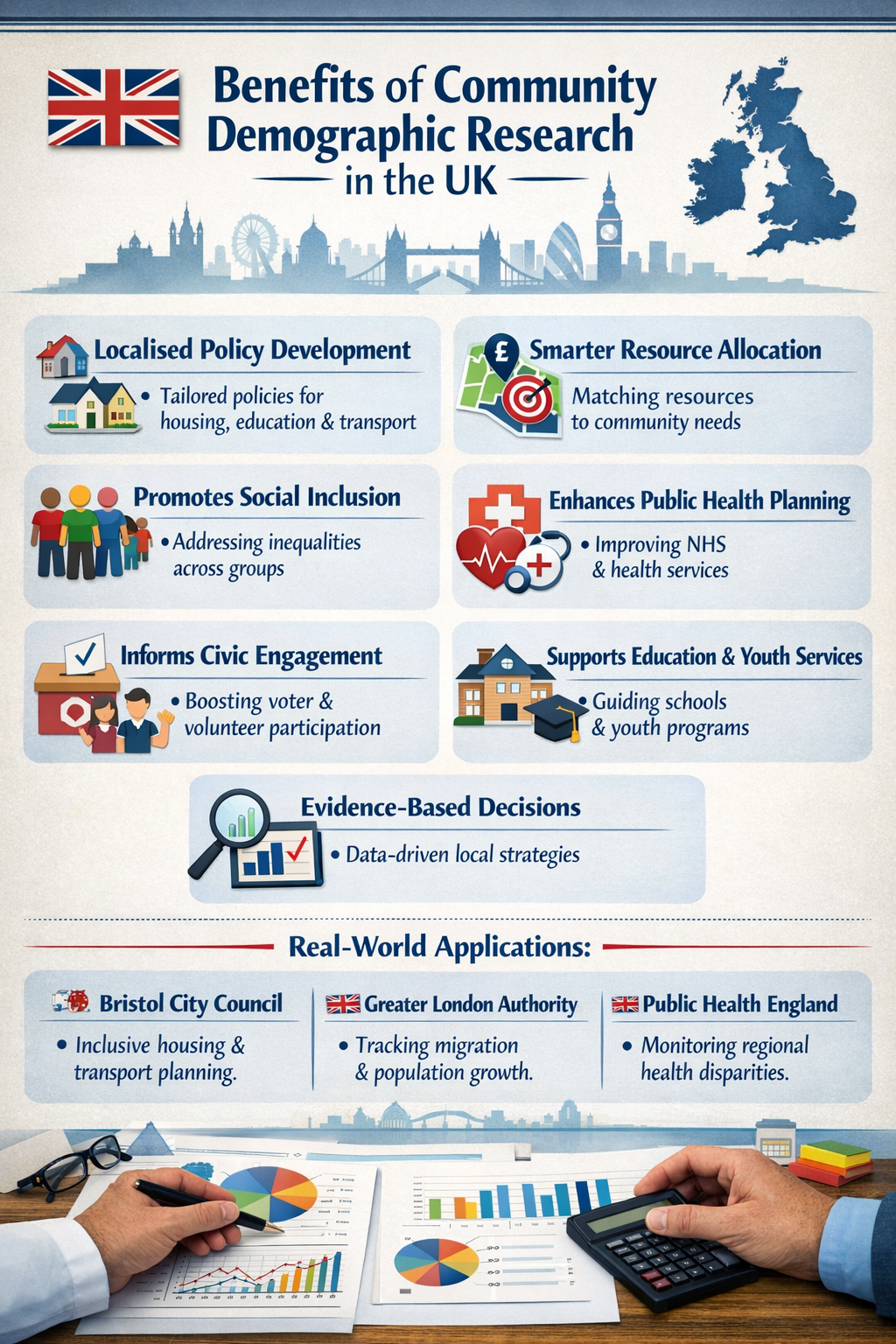
1. Localised Policy Development
• Enables councils and government bodies to tailor policies to the unique needs of each community.
• Supports targeted initiatives for housing, education, healthcare, and transport.
2. Smarter Resource Allocation
• Helps identify areas with high demand for services (e.g. elderly care, youth programs).
• Prevents over- or under-investment by matching resources to population needs.
3. Promotes Social Inclusion
• Reveals inequalities in access to services across ethnic, age, and income groups.
• Informs strategies to reduce discrimination and improve representation.
4. Enhances Public Health Planning
• Tracks health trends by region, age, and ethnicity.
• Supports NHS planning for chronic illness, mental health, and emergency response.
5. Informs Civic Engagement Strategies
• Identifies gaps in voter participation, volunteering, and community involvement.
• Helps design campaigns to boost engagement in underrepresented areas.
6. Supports Education and Youth Services
• Guides school placement and curriculum development based on population age and diversity.
• Helps target support for disadvantaged youth.
7. Strengthens Evidence-Based Decision Making
• Provides robust data for local authorities, charities, and researchers.
• Ensures decisions are grounded in real-world community dynamics.