Major Categories of Alternative Therapies
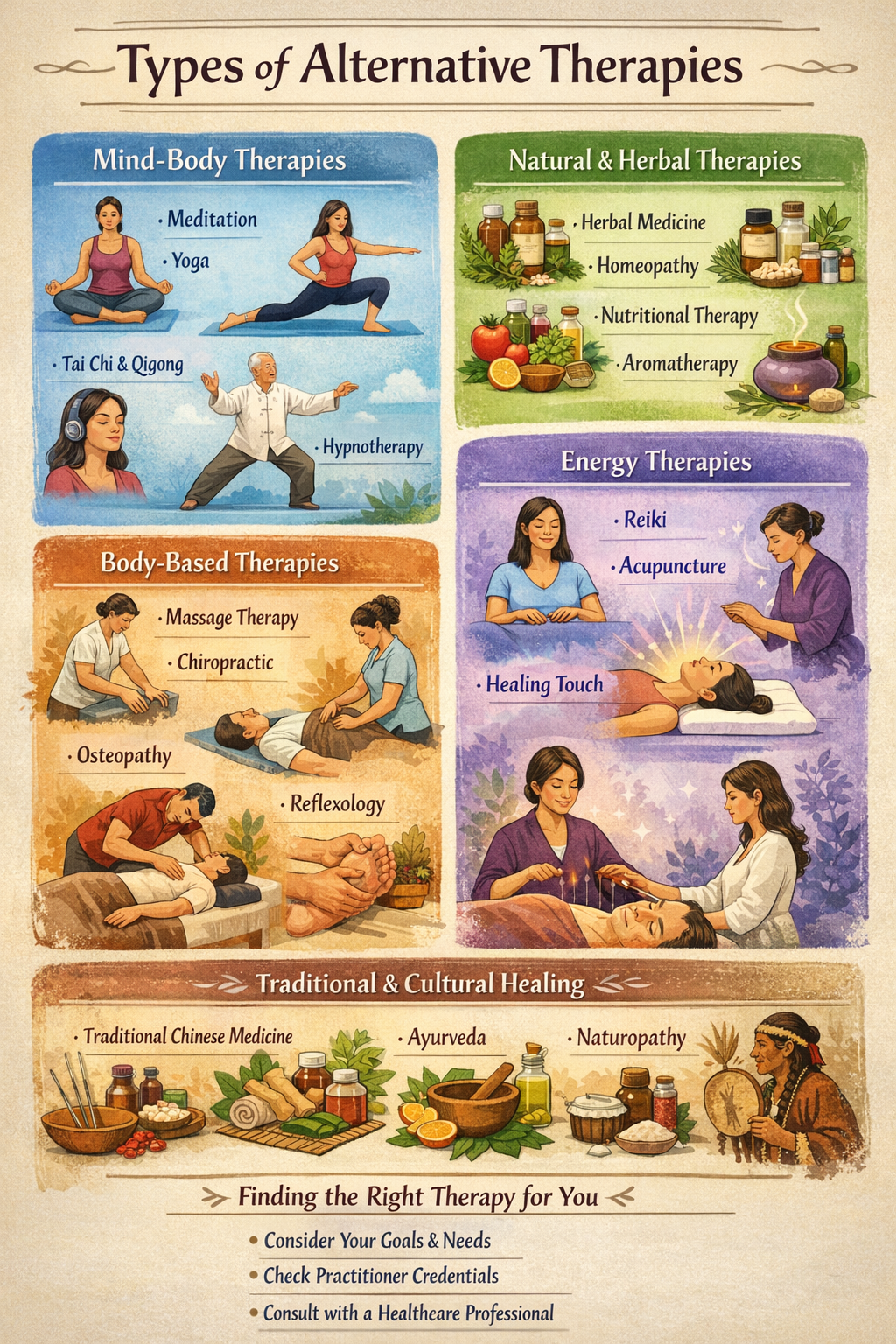
Mind–Body Therapies
These approaches focus on the connection between mental and physical health.
• Meditation – Practices that cultivate awareness and calm, such as mindfulness or transcendental meditation.
• Yoga – Combines movement, breathwork, and relaxation.
• Tai Chi & Qigong – Slow, flowing movements rooted in Chinese tradition.
• Hypnotherapy – Guided relaxation to help shift habits or manage stress.
• Biofeedback – Using sensors to learn how to control bodily functions like heart rate.
Natural & Biological-Based Therapies
These involve substances found in nature.
• Herbal Medicine – Using plant-based remedies.
• Homeopathy – Highly diluted substances intended to stimulate the body’s healing response.
• Nutritional Therapy – Tailoring diet to support health.
• Aromatherapy – Essential oils used for relaxation or mood support.
Body-Based & Manipulative Therapies
These focus on physical manipulation of the body.
• Massage Therapy – Relieves tension and promotes relaxation.
• Chiropractic Care – Spinal adjustments to address musculoskeletal issues.
• Osteopathy – Hands-on techniques to improve mobility and function.
• Reflexology – Applying pressure to specific points on the feet or hands.
Energy Therapies
These approaches work with the body’s energy fields, according to their traditions.
• Reiki – Gentle, hands-on or hands-off energy healing.
• Healing Touch – Similar to Reiki, focusing on balancing energy fields.
• Acupuncture – Inserting fine needles at specific points to influence energy flow (Qi).
Traditional & Cultural Healing Systems
Long-standing medical systems from around the world.
• Traditional Chinese Medicine (TCM) – Includes acupuncture, herbs, and Qi-based practices.
• Ayurveda – Ancient Indian system using diet, herbs, massage, and lifestyle practices.
• Naturopathy – Emphasizes natural remedies and the body’s ability to heal itself.
• Indigenous Healing Practices – Rituals, plant medicines, and community-based healing.
How to Choose What’s Right for You
People often explore alternative therapies for stress relief, chronic pain, emotional balance, or general wellbeing. If you’re considering trying one, it’s wise to:
• Look for qualified practitioners
• Check how the therapy aligns with your goals
• Discuss with a healthcare professional if you have medical conditions