
A blood pressure test is essential for monitoring cardiovascular health, detecting hypertension, and preventing serious health complications.
Key Purposes of a Blood Pressure Test
1. Monitoring Heart Health: A blood pressure test measures the force of blood against the walls of your arteries as your heart pumps. This information is crucial for assessing how well your cardiovascular system is functioning.
2. Detecting Hypertension: High blood pressure, often referred to as hypertension, can lead to serious health issues such as heart disease, stroke, and kidney problems. Many individuals with high blood pressure may not experience symptoms, making regular testing vital for early detection.
3. Routine Health Check ups: Blood pressure tests are a standard part of routine health examinations. They help healthcare providers evaluate overall health and identify potential risks associated with high or low blood pressure.
4. Guiding Treatment Decisions: For individuals diagnosed with high blood pressure, regular testing helps monitor the effectiveness of treatment plans. It allows healthcare providers to make necessary adjustments to medications or lifestyle recommendations based on the readings.
5. Assessing Risk Factors: Blood pressure tests can help identify risk factors for cardiovascular diseases, such as obesity, diabetes, and family history. Understanding these risks enables proactive management and lifestyle changes to improve health outcomes.
Below is a blood pressure chart from an ‘official NHS website’.
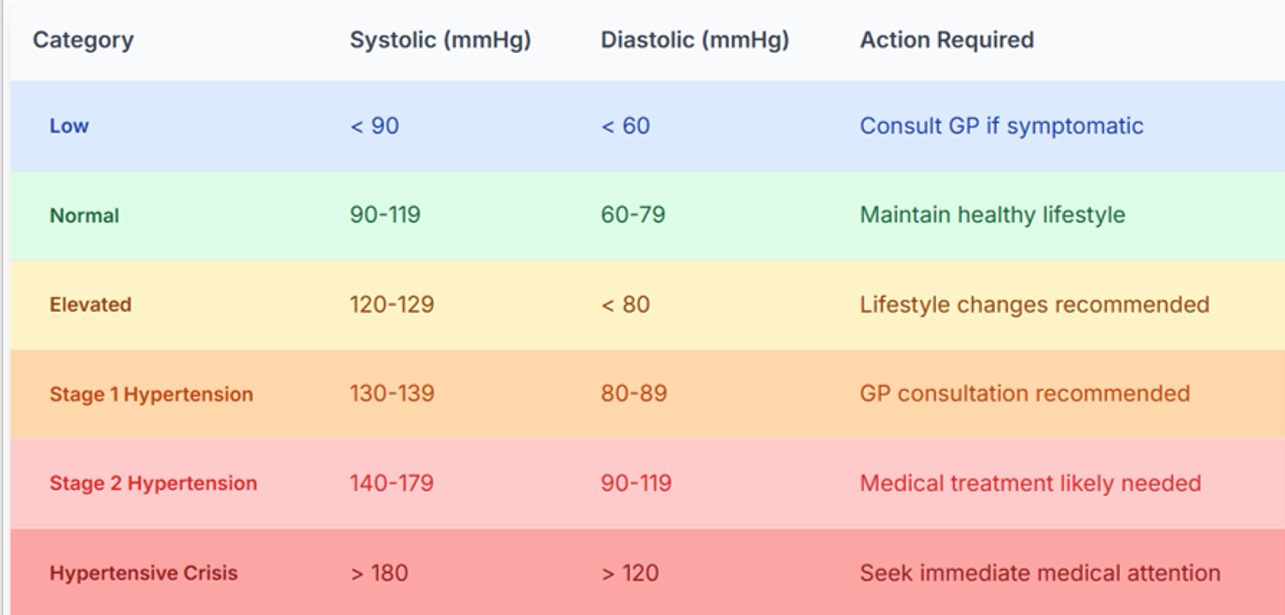
https://bpcalculator.co.uk/chart.html