Key Aspects of Women’s Health
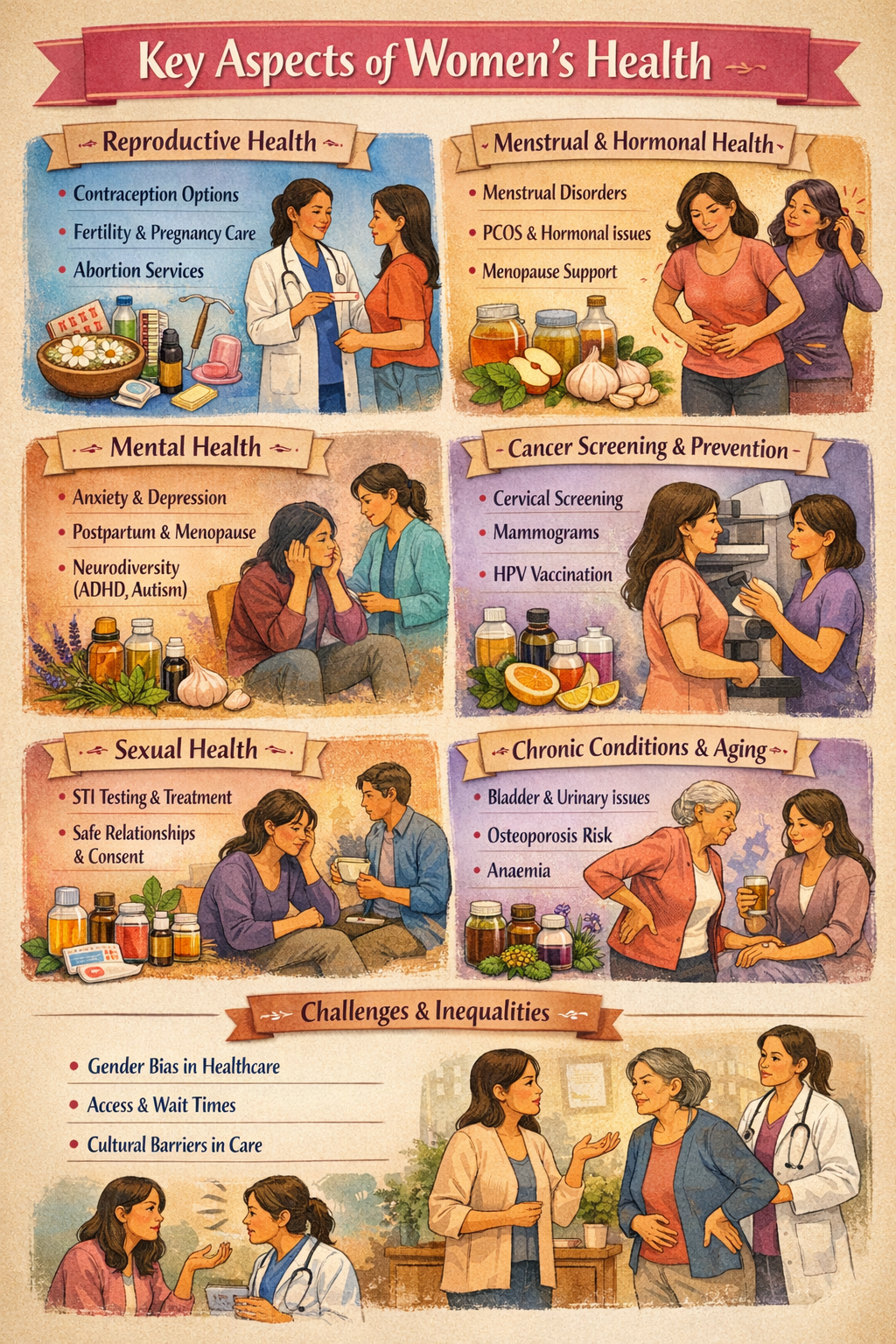
1. Reproductive Health
• Contraception: Free access to pills, implants, IUDs, and emergency contraception via NHS clinics and GPs.
• Fertility & Pregnancy: Support includes prenatal care, fertility services, and maternity leave rights.
• Abortion Services: Legal and accessible through NHS or private providers; includes counselling and follow-up care.
2. Menstrual & Hormonal Health
• Menstrual Disorders: Conditions like heavy bleeding, PMS, and adenomyosis are common but often underdiagnosed.
• Polycystic Ovary Syndrome (PCOS): Affects hormone levels, fertility, and metabolism.
• Menopause & Perimenopause: NHS offers HRT and symptom management, but many women report poor support and lack of awareness among GPs.
3. Mental Health
• Higher rates of anxiety, depression, and PTSD among women, especially during hormonal transitions (e.g., postpartum, menopause).
• Neurodiversity: ADHD and autism often go undiagnosed in women due to gender bias in diagnostic criteria.
4. Cancer Screening & Prevention
• Cervical Screening: Offered every 3–5 years for women aged 25–64.
• Breast Screening: Offered every 3 years for women aged 50–70.
• HPV Vaccination: Available for girls and boys aged 12–13 to prevent cervical cancer.
5. Sexual Health & STI Prevention
• Free STI testing and treatment available through NHS sexual health clinics.
• Education & Consent: Emphasis on safe relationships and sexual autonomy.
6. Chronic Conditions & Aging
• Anaemia: Common due to menstruation and pregnancy; iron supplements often needed.
• Bladder & Urinary Health: UTIs, incontinence, and pelvic floor issues are prevalent.
• Osteoporosis: Post-menopausal women are at higher risk due to declining oestrogen.
Challenges & Inequalities
• Gender Bias in Healthcare: Women’s symptoms are often dismissed or misdiagnosed.
• Access Gaps: Long wait times for gynaecology, menopause clinics, and mental health services.
• Cultural Barriers: Minority women face additional challenges in accessing respectful, informed care.